
Adversities in Early Life Has “Profound Consequences” For Wild Savannah Baboons
- Angela Findlay

- Jan 20, 2021
- 2 min read
Updated: Mar 8, 2021

It is well documented that our experiences in early childhood have an influence on our emotional and physical development, and negative experiences during this period can have detrimental consequences on our health and social functionality into adulthood.
However, this is not limited to humans, studies on wild primates and other animals have shown that they too can suffer because of early adversity.
Dr Stacy Rosenbaum is a biological anthropologist and behavioural ecologist at the University of Michigan, she presented some of her research on wild savannah baboons in Kenya during her recent online seminar at Bangor University North Wales.
She explained how the experience of early life adversity (ELA) can have profound effects on animal fitness in adulthood, especially on sociality and longevity.

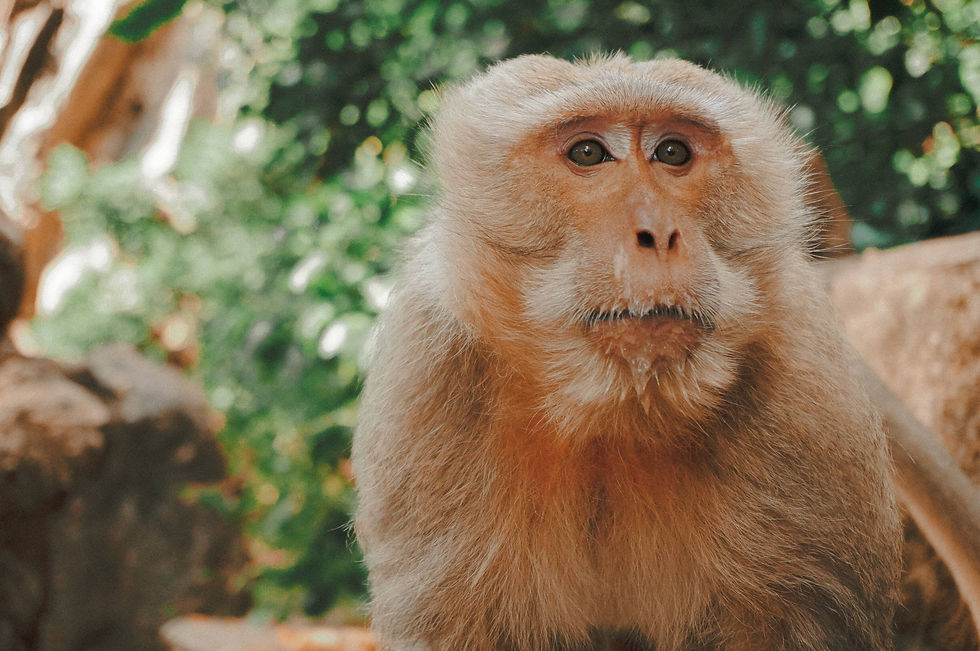
Photo credit: Elizabeth Archie
Previously recognised sources of ELA are
Drought
High population Density
Maternal loss
Sibling close to the same age
Low maternal rank
Maternal social isolation
Biological Embedding Hypothesis (BEH)
The BEH is part of a constraints model which proposes that the experience of ELA becomes embedded within certain types of immune cells. These cells are thought to be programmed to have a proinflammatory phenotype in response to harsh social and environmental conditions and low-grade chronic inflammation can lead to future illness.
“important in understanding evolutionary dynamics”
Hypothalamic Pituitary Adrenal (HPA) Axis
The HPA axis controls the reaction to stress and regulates many other bodily processes, including the regulation of the immune response, moods, and emotions. During stress, the HPA axis is activated and hormones are released from the adrenal cortex.
Glucocorticoids are a type of corticosteroid released from the adrenal cortex and effective at reducing inflammation and suppressing the immune system. Long-term activation of the stress response can overexpose the body to stress hormones leading to HPA axis dysregulation.
The BEH has 4 predictions:
The experience of ELA, organisms will have higher GC concentrations in adulthood
The experience of ELA, organisms will be more socially isolated in adulthood
Organisms who have strong social bonds will have lower GC concentrations
Part of the effect of ELA on GCs will be mediated by adult social bonds
To test the BEH predictions, Stacy used longitudinal data (early environment and adult social relationships & GCs) from the Amboseli Baboon Research Project.
A common way to measure HPA axis function is by measuring the glucocorticoid concentration in faecal samples. Mediation models were then used to analyse data.
Conclusion
She concluded that female baboons experiencing one or more of the ELAs led to a 9-14% increase in glucocorticoid concentration as an adult and that these effects may be independent of weak social bonds.
My Thoughts
I found this seminar interesting as well as the subject content, it has not directly made an impact on my career choice, but it has kept me going thinking about it.

Comments